
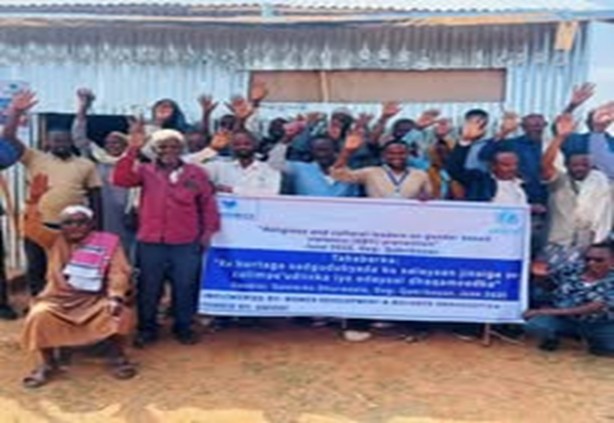
A total of 35 traditional clan leaders and religious leaders participated in the training sessions, which aimed to equip them with the knowledge and tools to challenge harmful social norms, support survivors, and promote protective practices.
These respected leaders not only received key information on GBV prevention and response, but also contributed valuable perspectives rooted in cultural and religious teachings that emphasize dignity, protection, and respect for all individuals. Their input enriched the discussions and helped contextualize GBV messaging in a way that resonates with the local communities.
As a result, the participants demonstrated strong commitment to act as agents of change, pledging to integrate GBV prevention messages into sermons, community dialogues, and traditional gatherings.
The outcome was a strengthened alliance between local leadership and GBV actors, enhancing community ownership and paving the way for more sustainable, community-driven GBV prevention efforts
Leave a Reply